


It’s National Pay Your Bills Week
Managing bills is a common source of stress for many people in the U.S. Studies show:
48% of Americans have paid a bill late in the past year.
17% of adults did not pay all their bills in full in a recent month.
Nearly 3 in 10 people are behind on at least one bill.
29% of consumers say managing bills causes stress or anxiety.
These numbers point to a visibility issue. Many people do not have a clear, complete view of their recurring bills.
National Pay Your Bills Week hopes to prompt a review of recurring financial obligations. The most useful action during this week is creating a clear view of what is owed and when it is due.
Build a Clear View of Your Bills
Start with one list of all recurring bills. Include:
who you pay
how much it usually costs
how often it is due
Keep this list in a single place that is easy to update. Some people use a spreadsheet or notes app. Others use tools like IDK MyBudget that are designed to keep recurring expenses visible in one place.
Next, group bills into:
fixed bills, such as rent, insurance, and subscriptions
variable bills, such as utilities or usage-based services
Then note when each bill is due during the month:
early month
mid-month
late month
This shows how bills line up with income and highlights periods of higher pressure.
Use Automation With Review
Automatic payments help maintain consistency for recurring bills with stable amounts. They reduce late fees and missed payments.
Automation works best when paired with a short monthly review. Without review, changes in pricing or timing can go unnoticed. This is where a Monthly 5-minute check can help:
review your bill list
confirm upcoming due dates and amounts
remove bills that no longer apply
note any changes
This keeps your system accurate and current.
A Holiday You Can Celebrate Without Spending
National Pay Your Bills Week is a reminder to pause and review recurring obligations. A clear view of bills reduces surprises and supports planning throughout the month.
Visibility creates consistency.
Consistency supports control.

Why Credit Doesn’t Feel Like Spending
Most Americans don’t think very hard about whether they use cash or credit for everyday purchases. They tap, swipe, or click, and move on. But research shows that this choice quietly shapes how much we spend, how aware we are while spending, and how easily small purchases turn into long-term problems.
The issue isn’t that credit cards exist or that people use them. It’s that credit changes how spending feels. And when spending stops feeling like spending, behavior changes.
Most Americans don’t think very hard about whether they use cash or credit for everyday purchases. They tap, swipe, or click, and move on. But research shows that this choice quietly shapes how much we spend, how aware we are while spending, and how easily small purchases turn into long-term problems.
The issue isn’t that credit cards exist or that people use them. It’s that credit changes how spending feels. And when spending stops feeling like spending, behavior changes.
Cash Creates Friction. Credit Removes It.
Paying with cash is immediate. You hand something over and it’s gone. You see the bills leave your wallet. That moment creates a natural pause, what researchers often call the “pain of paying.”
Credit doesn’t work that way. When you use a card, the cost is delayed and abstract. The actual loss of money happens later, quietly, often online, bundled with dozens of other purchases. Multiple studies show that this reduced friction leads people to spend more and make more impulse purchases when using credit compared to cash
And it’s not about intelligence or self-control because even people who understand this effect still experience it. The brain just responds differently when payment is delayed.
Why “Just Be Disciplined” Doesn’t Work
The problem isn’t discipline. It’s feedback…or lack thereof.
Cash provides instant feedback. Credit stretches the feedback loop. When feedback is delayed, behavior drifts. People don’t connect the coffee, the takeout, and the small online purchase to the eventual credit card bill. By the time the statement arrives, the spending feels distant and hard to trace back to individual decisions.
This is why many people are surprised by their balances even when their purchases felt “small.” The system removes the signals that would normally slow them down.
Rewards Make Credit Feel Even Lighter
Credit card rewards amplify this effect. A large majority of Americans use rewards cards, and many say rewards are a primary reason they choose credit over cash
On paper, rewards feel rational: why not earn something back?
But research consistently shows that rewards don’t just change how people pay. They change how much people spend. Even modest cashback incentives are associated with significant increases in card spending and higher carried balances, especially among people who are more financially constrained
The reward reframes the transaction. Spending feels productive instead of costly. The friction drops further.
This Starts Early, Even If We Don’t Notice It
Kids growing up today rarely see cash change hands. They see cards, phones, subscriptions, and taps. Money just kind of “happens”.
Because of this, financial socialization isn’t just about what parents say. It’s about what kids observe. When spending is invisible, kids don’t develop an intuitive sense of limits. They don’t feel the pause or see trade-offs in real time.
Spending begins to feel infinite.
The Fix Isn’t Avoiding Credit
Going cash-only isn’t realistic for most people, and it’s not the point. Credit is useful. It’s often safer, more convenient, and sometimes even necessary.
The real issue is that credit removes friction and awareness.
What works better than abstinence is restoring feedback. Making spending visible again. Reconnecting purchases to categories, limits, and outcomes so decisions regain context.
When people can see where money goes, credit stops feeling weightless.
Visibility Replaces Willpower
This is where shared tracking and simple money maps matter. They can’t restrict behavior but they can reintroduce the feedback and shorten the loop between decision and consequence.
For families, this is especially important. Kids don’t need to manage adult finances, but they do need to see that money follows structure. Tools that make spending visible in a shared, age-appropriate way—whether that’s a simple tracker or something like IDK My Money help rebuild the connection between action and outcome.
Credit Isn’t the Enemy. Invisibility Is.
When spending feels unreal, people overspend. When feedback disappears, habits drift. Restoring awareness isn’t about restriction or shame. It’s about giving the brain the signals it needs to make better decisions.
The real question is what happens after the swipe. Because for many Americans, everyday credit spending doesn’t end at the statement—it turns into long-term debt. That’s where costs really start to add up.

When Money Feels Random, Kids Push Back
Most conflict between parents and kids around money isn’t about entitlement or discipline. It’s about randomness. When kids can’t see why decisions are made, money feels inconsistent and personal, even when it isn’t.
From a parent’s perspective, the rules make sense. Some purchases fit, others don’t. Sometimes the answer is yes, sometimes it’s no, and sometimes it’s “not right now.” But for a child, especially one who hasn’t been given any visibility into the structure behind those decisions, the pattern is unclear. Without that structure, money feels arbitrary.
Most conflict between parents and kids around money isn’t about entitlement or discipline. It’s about randomness. When kids can’t see why decisions are made, money feels inconsistent and personal, even when it isn’t.
From a parent’s perspective, the rules make sense. Some purchases fit, others don’t. Sometimes the answer is yes, sometimes it’s no, and sometimes it’s “not right now.” But for a child, especially one who hasn’t been given any visibility into the structure behind those decisions, the pattern is unclear. Without that structure, money feels arbitrary.
Our kids don’t challenge money rules because they want control, they’re just trying to understand the system. We can’t follow rules we’ve never seen.
Confusion Is a Structure Problem, Not a Behavior Problem
Repeated questions about money are often treated as misbehavior. In reality, they’re a sign that the rules aren’t visible.
Kids are constantly trying to determine what makes something a yes or a no. If they can’t identify a pattern, they assume the decision is based on mood, timing, or even favoritism. That’s when pushback increases.
When money rules feel random, kids will continue to challenge them in an attempt to learn them.
Why Explanations Without Context Don’t Work
Many parents do explain money, but only in fragments. Phrases like “we can’t afford that” or “that’s too expensive” are accurate, but incomplete. Without context, they don’t teach how decisions are made, only that decisions exist.
Over time, those explanations blend together and lose meaning. To a child, they feel interchangeable and inconsistent. Money becomes something that happens to them, rather than something governed by understandable constraints.
Understanding requires more than explanation. It requires structure.
What Kids Actually Need to See
Our kids don’t need access to adult financial stress, detailed budgets, or income numbers. What they need is a simplified framework that shows how money is organized.
Three elements are enough:
Categories that show where money goes
Limits that define what’s available
Progress that shows movement toward goals
When those elements are visible, money stops feeling personal. A “no” isn’t about the child. It’s about the plan.
How Visibility Changes the Conversation
When money lives only in a parent’s head, kids have no way to connect decisions to outcomes. But when money is visible, outcomes teach the lesson naturally.
A category runs out. A goal takes longer to reach. A trade-off becomes obvious. These moments don’t require lectures or enforcement because the system explains itself.
This shifts money conversations away from emotion and toward logic. Instead of debating fairness or intent, families talk about trade-offs and timing. The conversation becomes calmer because the rules are no longer invisible.
Why Shared Tracking Supports Learning
Shared money tracking works because it externalizes the rules. It gives our kids a reference point that doesn’t depend on memory or authority.
Family-friendly tools like IDK My Money are useful because they make the system visible enough for kids to understand it. The goal isn’t precision. It’s consistency.
When kids can see the structure, they stop testing the boundaries…as often.
The Real Goal Is Coherence
This isn’t about control or restriction. It’s about coherence.
When money makes sense, kids push back less. They learn to anticipate limits, plan ahead, and weigh trade-offs on their own. Over time, that understanding becomes internalized.
That’s how financial confidence develops. Through repeated exposure to a system that is visible, consistent, and understandable.

How to Talk About Money at Each Age
Helping our kids learn about money is very much a timing thing. As much we may like the idea of teaching our 7 year olds all the finer points of day trading, how and when we talk to our kids about money has a huge impact on the habits they develop.
They don’t need edit access to the family budget spreadsheet…they just need you to speak at their level.
Helping our kids learn about money is very much a timing thing. As much we may like the idea of teaching our 7 year olds all the finer points of day trading, how and when we talk to our kids about money has a huge impact on the habits they develop.
They don’t need edit access to the family budget spreadsheet…they just need you to speak at their level.
The Rules That Applies at Every Age
Before we break this down by age, here’s the framework that works across the board:
Name the goal
Name the constraint
Name the plan
That’s it.
You’re not explaining money. You’re explaining decisions.
Everything below is just that framework, scaled to the kid in front of you. Easy peasy.
Ages 4–6: Money Is Finite
At this age, kids don’t understand budgets or income.
They understand:
“One or the other”
“Now or later”
“Yes or no”
So keep it concrete.
What that sounds like:
“We can buy one thing today.”
“If we buy this, we can’t buy that.”
“We’re saving this money for later.”
What’s less likely to work:
“It’s expensive.”
“We can’t afford it.”
“If daddy wants to retire by 65 he’s gotta put that money in Bitcoin.”
Those last three sound final to adults but feel random to kids. Especially the third one.
The goal here, again, is consistency. We’re teaching that money follows rules, not moods.
Ages 7–10: Money Has Jobs
This is when kids are ready to understand structure. Money isn’t just something you get — it has jobs.
Spend. Save. Give. Plan.
What this sounds like:
“Some money is for now. Some is for later.”
“If you want that, let’s make a plan.”
“We already spent the fun money this week.”
This is the sweet spot for allowances, simple savings goals, and letting kids feel small consequences as feedback - not punishment.
This is also when visibility starts to matter. When kids can see where money goes, the questions change.
Instead of “Why not?” You start hearing “How long until…?”
Progress made!
Ages 11–14: Money Is Trade-Offs
Middle school is where money stops being theoretical. Our kids want independence.
They want things. They’re starting to compare.
Perfect timing to introduce trade-offs.
What works here:
“If we spend more here, we spend less there.”
“You can decide — but you own the outcome.”
“That choice means waiting on this one.”
This is where many parents panic and clamp down.
Don’t.
This is where guided autonomy matters. Let them manage categories. Let them make mistakes that don’t ruin anything.
And when they do, talk through why it played out the way it did. Don’t lecture; just explain the Why behind what happened and what they can do to avoid making the same mistake again.
Ages 15–18: Money Is Real Life Practice
By high school, kids don’t need explanations. They need reps.
This is the age for:
Monthly budgets instead of weekly allowances
Covering real expenses
Managing priorities, not just purchases
What works now:
“This is your monthly amount. You run it.”
“I’ll help, but I won’t rescue.”
“Let’s review what worked and what didn’t.”
This is also when transparency matters most. Teens should understand:
What things cost
Why trade-offs exist
How adult decisions actually get made
The idea here isn’t stress them out, but to ground them. Sheltering teens from money is a first class ticket to bad money decisions in early adulthood.
The Parents Who Say “I’m Still Learning” Are Actually Doing It Right
The truth is you don’t need to have money figured out to teach it.
You just need to learn out loud.
“We’re adjusting.”
“We didn’t plan for this.”
“We’re choosing stability over impulse.”
When we do this we’re conducting real-world training that our kids will hearken back to their entire lives.
This is why shared visibility helps — whether it’s a whiteboard, a simple tracker, or apps like IDK My Money.
At the heart of it, all we parents want is to know that our kids will be okay. Forever. The best way we can do that is by being open with them about how money works, and show them how to learn from mistakes. Theirs and ours.

The “Money Weather” Kids Grow Up In
Oh wouldn’t it be lovely if our kids could learn everything there is to know about money from one big talk. “The Birds and Bees of Money” has a nice ring to it…but it doesn’t exist.
Kids learn money the same way they learn language, tone, and stress — by living inside it. Every home has money weather. Sunny. Stormy. Quiet. Chaotic. Avoidant. Anxious. Invisible. And whether we mean to or not, kids adapt to it.
Oh wouldn’t it be lovely if our kids could learn everything there is to know about money from one big talk. “The Birds and Bees of Money” has a nice ring to it…but it doesn’t exist.
Kids learn money the same way they learn language, tone, and stress — by living inside it. Every home has money weather. Sunny. Stormy. Quiet. Chaotic. Avoidant. Anxious. Invisible. And whether we mean to or not, kids adapt to it.
Some kids grow up learning:
Money is stressful
Money is private
Money shows up randomly
Money disappears quickly
Money equals arguments
Others learn:
Money is planned
Money has limits
Money involves trade-offs
Money decisions have reasons
Most parents never explicitly teach those lessons; kids just absorb them. This financial socialization — not as an academic term, but as real life - is the background noise of how money works in your house.
Silence Teaches Too
A lot of parents think they’re protecting their kids by not talking about money.
“We don’t want them to worry.”
“They’re too young.”
“They don’t need to know.”
But kids are excellent pattern detectors and terrible mind readers.
When money is never discussed, kids still notice:
The tension when bills are due
The hesitation before purchases
The inconsistent “yes” and “no”
The stress that shows up without explanation
Without context, kids fill in the gaps themselves which is where the idea of how money works gets really murky.
You Don’t Need to Be “Good With Money” to Teach It
Here’s the myth that trips most parents up:
“I’m still figuring this out myself, so I’m not qualified to teach it.”
That’s backwards.
You don’t teach kids by being perfect. You teach them by making decisions visible.
Saying:
“We’re choosing this because it fits our plan.”
“We can’t do both, so we’re picking one.”
“We messed this up and now we’re adjusting.”
This doesn’t mean oversharing, but rather modeling decision-making. Your kids don’t need you to be flawless, they just need you to narrate.
The Smallest Shift That Actually Matters
You don’t need a budget meeting or a family spreadsheet. You need one sentence, said out loud, once a day.
Examples:
“We’re buying store brand so we can save for the trip.”
“That’s not in the plan this week.”
“We already spent the fun money, so we’ll wait.”
“This is a bill we pay every month.”
That’s it! Over time, those sentences create structure where randomness used to live. Money stops feeling emotional and starts feeling intentional.
Visibility Beats Control
Kids don’t need control over adult finances, they just need visibility into how decisions are made.
When money is invisible, choices feel arbitrary, but when money is visible, choices start to make sense.
That’s why tools like IDK My Money and others exist — not to turn kids into accountants, but to give families a shared reference point so money stops being abstract.
This Is the Foundation
Allowance systems, chores, savings jars, apps — all of that comes later. First comes the environment.
The weather.
If money is always tense, kids learn tension.
If money is always hidden, kids learn avoidance.
If money is discussed calmly and consistently, kids learn confidence.
The question isn’t whether you’re teaching money — it’s what your house is teaching without saying a word.
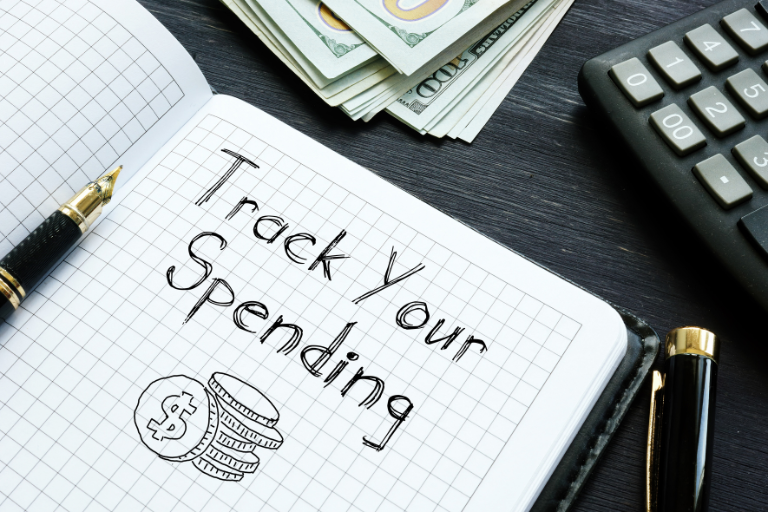
Why Tracking Your Spending Changes Everything - Even If You’re Doing “Fine”
A lot of people say they’re fine with money. Bills get paid, nothing is late, and most months work out, even if the balance feels a little lower than expected. When nothing is obviously wrong, it’s easy to assume there’s nothing to fix.
But for most people, money stress doesn’t come from one big mistake. It comes from not really knowing where the money goes, day to day, and feeling surprised when it disappears faster than it should.
Tracking changes that.
Most money stress comes from not knowing
When money feels unclear, the brain fills in the gaps. Groceries feel more expensive than last time, the card balance feels higher than expected, and it starts to feel like money is leaking out in ways you can’t see.
Tracking doesn’t solve everything, but it does one important thing. It replaces guessing with knowing. Once you can see what actually happened, the stress drops because there’s nothing left to imagine.
Paying attention changes how people spend
People who track their spending don’t suddenly become perfect or stop buying things they enjoy. What changes is the pace. Spending slows down just enough for people to notice patterns, like how often they eat out or how many small purchases pile up over a week.
That awareness makes it easier to adjust before things feel out of control. Instead of reacting after the fact, people course-correct as they go, which is why tracking is linked to better habits and lower stress.
Tracking isn’t about restriction
Tracking gets a bad reputation because it sounds like rules and limits, but in practice it’s mostly about clarity. When money stays abstract, every purchase feels isolated. When you track it, choices start to connect.
A $20 purchase stops being “just $20” and starts to feel like a tradeoff. Maybe it was worth it. Maybe it wasn’t. Either way, the decision feels intentional instead of automatic, and that alone changes how people relate to money.
This helps even when nothing feels broken
You don’t have to be struggling to benefit from tracking. In fact, people who feel “mostly fine” often see the biggest shift because they weren’t paying close attention before.
Tracking helps them notice habits they didn’t realize they had, save without trying harder, and feel confident instead of guessing. Money stops being background noise and starts to feel manageable.
Simple tracking works better than complex systems
The most effective tracking systems are usually the simplest ones. Writing down what happened, giving it a name, and seeing the total change is often enough to build awareness.
This is why grocery tracking works so well for many families. You watch the total change as you shop, adjust in real time, and leave the store knowing exactly what happened. The same idea applies to basic money tracking. The value isn’t in the math. It’s in the pause.
Tools like IDK My Money are built around that pause. Nothing runs in the background, nothing connects automatically, and nothing pretends to know your intent. You log money when you move it and watch balances change in real time.
It doesn’t tell you what to do. It just makes what you’re doing visible, which is usually enough to change behavior over time.
Attention is the real habit
Most money advice focuses on goals, but goals don’t work without awareness. Tracking builds awareness first, which is why it changes how people feel, think, and act around money, even when they thought they were already doing fine.
The cheapest bill you’ll ever pay is attention, and most people haven’t been paying it consistently.

Wealth Doesn’t Mean the Same Thing to Everyone at Home
Research shows that many parents want to teach money, but they don’t always explain how decisions are made. Kids see outcomes, not reasons. Sometimes the answer is yes. Sometimes it’s no. Over time, money starts to feel unpredictable.
Families use the same words about money, but they don’t always mean the same things.
Parents often talk about money in broader terms.
“We’re fine.”
“We need to be careful.”
“Things are expensive right now.”
Kids see it as even more abstract than parents.
“Can I buy this?”
“Why not?”
“Do we have enough?”
While none of those seem like inherently bad ways to look at money, they leave room for families to shore up their understanding of, and communication around money.
Research shows that many parents want to teach money, but they don’t always explain how decisions are made. Kids see outcomes, not reasons. Sometimes the answer is yes. Sometimes it’s no. Over time, money starts to feel unpredictable.
That’s where confusion sets in.
When money isn’t concrete, kids don’t learn patterns. They don’t see what’s planned, what’s already used, or how choices affect plans and balances. Adults, meanwhile, assume kids will “get it eventually.”
They usually don’t.
Families who feel more confident about money tend to share something simple: The Truth. Often that starts with tracking money together in a shared place, rather than keeping it abstract or private. Tools like IDK My Money are designed for exactly that kind of shared visibility.
When money is visible and tracked consistently, conversations change. Decisions feel less random and our kids start connecting spending to outcomes. And so do we.

“Everything Is More Expensive” — What Paying Attention Actually Changes
If you ask families why money feels harder right now, the answer is almost always the same:
“Everything is more expensive.”
Groceries, gas, utilities, rent — the costs people deal with every day all seemed to rise at once. Inflation over the last few years was real, uneven, and disruptive. For many households, it felt like doing the same things suddenly required more money.
But there’s something important that often gets missed in these conversations.
If you ask families why money feels harder right now, you’ll hear the same thing:
“Everything is more expensive.”
And that feeling isn’t made up…prices did spike. Groceries, gas, rent — all of it hit at once. And for most, wages didn’t keep up. All of a sudden doing the same things suddenly cost more.
But here’s what’s interesting:
The stress around money often grows faster than the numbers themselves. Most families don’t actively track their spending because it feels overwhelming, tedious, or pointless. So money becomes something you feel, not something you see.
You swipe your card.
You glance at your balance.
You assume everything is getting worse.
You start to seriously consider which family members you can sell without feeling bad.
When money is invisible, anxiety fills in the gaps.
Families who pay attention don’t escape inflation — but they experience it differently.
They start noticing things like:
Some prices really did go up and stayed there
Some spiked and then came back down
Some fluctuate week to week
Some “expensive months” were actually driven by one or two categories (or discretionary spending we didn’t think about)
While that awareness might not make things any cheaper, it does make the picture more clear. Instead of “everything is more expensive,” the story becomes:
“This is where costs changed. This is where they didn’t. This is what we CAN do about it.”
That shift in mindset matters more than most realize.
Why discipline isn’t the starting point
Most money tools assume the problem is behavior:
Budget harder.
Spend less.
Try again next month.
But discipline doesn’t help if you don’t actually understand what’s happening. Visibility comes first.
When money is visible:
Decisions feel smaller
Trade-offs feel intentional
Stress subsides
Choirs sing heavenly melodies as angels descend from the clouds (results not typical)
How IDK Can Help
IDK My Budget wasn’t built to tell families what to do with their money. It was built to make money visible — bills, debt, commitments — so stress turns into strategy.
Paying attention doesn’t fix inflation.
But it fixes confusion.
And in a season where money already feels heavy, that foundation makes everything else easier to carry.

Most Parents Teach Money Now (But It’s Still Hard)
More parents than ever, today, are trying to teach kids about money...
But many adults didn’t grow up learning about money themselves. In fact, one in five older parents said they never taught saving at all. That means a lot of today's parents are learning money skills while trying to pass them on.
More parents than ever, today, are trying to teach kids about money.
Research shows that most U.S. parents have taken at least one step to help their kids learn how saving works. Some help kids set savings goals. Others open a savings account for them.
But even with good intentions, money is still hard to talk about.
Many adults didn’t grow up learning about money themselves. In fact, one in five older parents said they never taught saving at all. That means a lot of parents are learning money skills while trying to pass them on.
So what does teaching money usually look like?
How Families Learn Money Together
Most families start simple.
Some use piggy banks or savings jars, so kids can see money grow. Others use allowances, usually small weekly amounts. Many parents connect allowance to chores to show that money comes from work.
Parents also teach money during normal life:
grocery shopping
trips to the bank
planning a birthday party
choosing one thing instead of another
These moments help kids understand that money is limited and choices matter.
Where Things Break Down
Even with these efforts, many parents still feel unsure.
Money tools often assume adults already understand money. They rely on charts, categories, and numbers that make sense after you know what you’re looking at.
For kids—and for parents who don’t feel confident—this creates friction.
Parents feel like they need to explain everything first.
Kids feel like money is abstract and confusing.
So learning stalls.
Starting With Visibility Instead
Some families are starting to focus less on rules and more on visibility.
Instead of teaching kids what they should do, they focus on helping kids see what’s happening. Where money comes from. Where it goes. What it’s already for.
Tools like IDK My Money make this approach even simpler. Money is shown visually, so changes are easy to notice without needing a lesson first. “You had $X. You spent $Y on [this thing]. Now you have $Z.”
This makes cash flow easier to understand—without turning it into a lecture.
MakING It All Make Cents
Parents want to teach their kids about money, but many don’t have the foundations down themselves. Today’s kids don’t need extra classes or extensive financial education and parents don’t need to be experts (that all comes with time). Families just need to put a spotlight on their money.
That’s where learning actually begins.
Sources
NerdWallet – research on parents teaching saving, generational gaps, and teaching methods
Ipsos – surveys on allowance use and typical weekly amounts
The Week – reporting on T. Rowe Price research about allowance and chores
MoneyTimeKids.com – examples of teaching money through everyday errands